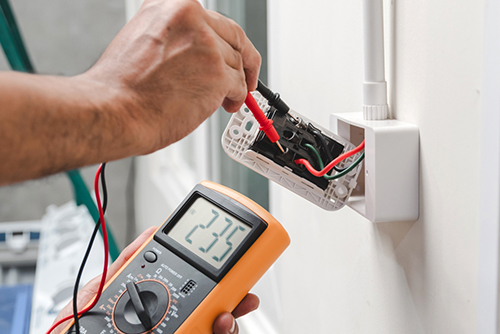
Top 10 Tips To Evaluate Skilled Technicians For The PAT in Nottingham
The competence of the person who performs Portable Appliance Testing is the crucial element in transforming the mechanical process into a legal defensible system. According to UK laws, particularly the Electricity at Work Regulations 1989 there is no mandatory licensing scheme or legally required qualification for testers of PAT. Regulation 16 specifies that persons must possess the "technical know-how or knowledge" required to avoid accidents and injuries. This concept of "competence" is a full obligation on the dutyholders (employers) to choose and employ technicians who show formal training coupled with practical experience and sound judgement. Lack of a required certification creates a market that has varying levels of technician capability which makes it crucial that duty holders understand how to verify competency beyond just having an official certificate. A truly qualified electrician is not merely an engineer who can conduct tests. They are aware of the fundamental principles behind electrical safety, is able to accurately interpret results, make informed decision on whether or not to pass and also provides important information on risk assessment.
1. The EAWR 1989 definition of competency in Nottingham
The legal requirement is laid out by Regulation 16 of the Electricity at Work Regulations 1989 in which it is stipulated that employees must be competent to prevent danger and injury. HSE defines competence as the capacity to complete a task in a safe and effective way without putting themselves or others at risk. This is a combination three elements that include understanding (theory), practical experience (practical application) as well as knowing (the equipment and system they test) and a well-organized working environment. A technician is only legally certified if they have all three.
2. Formal Qualifications vs. Demonstrable competence in Nottingham
There is no legal requirement that a qualification be acquired. But formal education is the most tangible evidence of knowledge. City & Guilds 2377 (In-service Testing and Inspection of Electrical Equipment) is the standard for industry. It isn't enough to confer the competence. It is also necessary to possess practical experience. Duty holders must take into consideration the relevant qualifications as well as evidence of actual experience. A technician without any formal qualifications would have to provide very robust evidence of vast experience and knowledge to be considered competent.
3. City & Guilds qualifications 2377 are explained
City and Guilds' 2377 qualification is an Level 3 qualification which assesses the knowledge of a candidate about the IET Code of Practice, and their capability to perform checks and tests correctly. It is offered in two sections 2377-77 (theory-based multiple-choice examination) and 2377-78 (practical assessment). The full award proves that the knowledge of the technician as well as his skills in the field have been independently evaluated. It is wise to verify this certification by requesting the certificate number, and then confirming its validity by using the City & Guilds verification portal. Certificates can be forged.
4. It is essential to have hands-on practical Experiential Learning in Nottingham
It is not worth anything without practical application. A competent technician will have extensive hands-on experience testing different appliances in various environments. The experience of technicians allows them to detect subtle issues, safely handle unfamiliar equipment and perform their job effectively in difficult environments like a construction sites or factories. To determine the quality of the testing background, dutyholders should ask prospective providers or technicians about their experience.
5. Experience with the IET Code of Practice For In-Service Inspection and Testing
The IET Code of Practice is the standard for PAT testing. A certified technician should not only have an original copy, but should possess a thorough, practical understanding of its contents. This includes knowing the different categories of equipment, the ordering of visual tests and inspections and how to properly employ testing instruments. Their ability to reference and follow this advice correctly is an important measure of their professional competence and expertise.
6. Understanding and calibration of Test Instruments
The technician needs to understand the importance of accurate test results dependent on the equipment they use. It is essential that they know their PAT test equipment has to be calibrated by a reputable UKAS laboratory regularly (typically each year) to ensure precise readings. They must have the validity of their certification for the device. Additionally, they need to understand how the device operates and also conduct an everyday test (e.g. the lead test). They should also be able interpret the results generated by the device, rather than just recording numbers.
7. Ability to conduct meaningful visual inspections in Nottingham
The majority of faults are identified through an extensive visual inspection. This is a step that a technician with high qualifications takes very seriously. He will check carefully all cables and plugs as well as connectors and casings to check for damage, wear or evidence of excessive heat. They know how to correctly connect a plug, and also the proper fuse rating. It is possible that a tester with less experience will rush or skip this process entirely.
8. Applying the results to interpret them and apply the pass/fail criteria in Nottingham
The tester's electronic circuitry produces readings. It is the technician who makes the judgment. The ability to comprehend and use the IET Code of Practice limits for pass/fail as well as the specifications of the appliance proves the ability. To illustrate, they should be able determine when a slightly elevated resistance to insulation is considered acceptable and when a seemingly passable reading on earth continuity may indicate latent faults in a specific appliance. A professional with a degree is the ability to make the right decisions.
9. Insurance and Liability Considerations in Nottingham
While it is not a requirement of the law, any competent technician should have Public Liability Insurance. This will protect the client should the technician cause property damage during testing. In addition, by appointing an electrician who has demonstrated proficiency, the person in charge will be able to defend themselves in court of "due care" and is able to prove that they have made every effort to find the right person that is essential for any investigation into the possibility of an electrical accident.
10. Documentation and Communication skills in Nottingham
The test process is ineffective without a clear, precise documentation. Technologist who is qualified must create precise, clear documents and asset registers which correctly identify every device. The results of all tests should be documented, with a clear result should be stated. They must also possess the ability to effectively communicate with dutyholders. This involves educating them on any issues that are discovered, the potential risks that come with it and the required actions. This communication is an essential component of the safety process. Have a look at the best Nottingham electrical equipment testing for website advice.
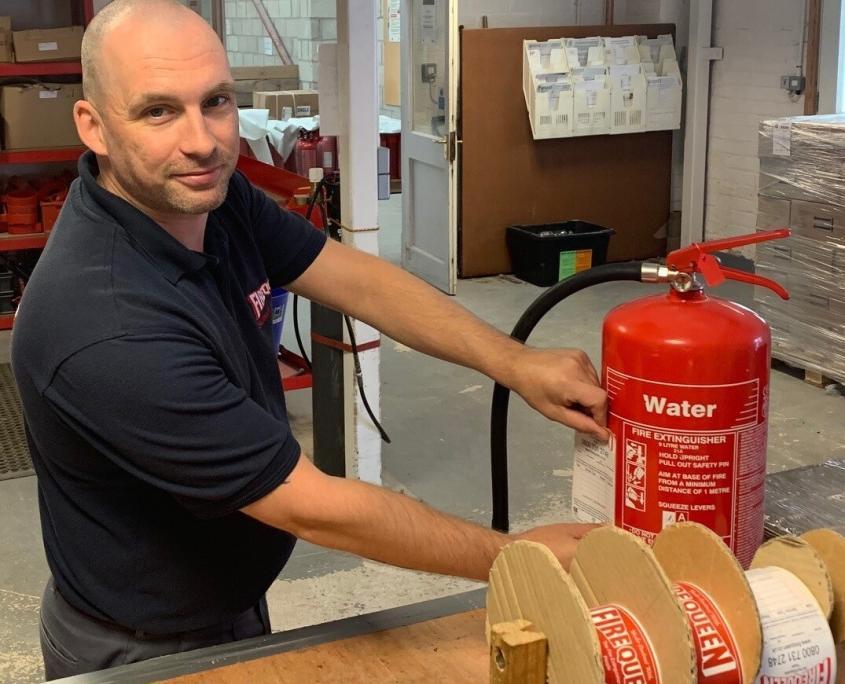
Top 10 Tips For Fire Extinguisher Service Contracts in Nottingham
In the UK, a service agreement for fire extinguisher repair is an important choice that goes beyond a simple consideration of price. Within the UK regulatory context, which is governed by the Regulation Reform (Fire Safety) Orders 2005, a service contract is the official procedure by which the responsible individual fulfills their legal obligations to maintain firefighting devices. A well-drafted contract will ensure compliance and also establishes clear obligations among the parties. A poorly-drafted contract could result in false security, concealed obligations, or gaps in compliance. Understanding these contracts, including their inclusion of service and pricing models as along with termination clauses and liability limitations is crucial to choosing a partner to maintain your equipment as well as aid in your fire safety program.
1. Contract Types Full-Compliance in contrast to. Time-and-Materials in Nottingham
Understanding the basic design of your contract is essential. The most comprehensive choice is to choose a Full Compliance or Inclusive Contract. For a flat annual cost, the service provider is responsible for the entire schedule of services (annual, 5 years, 10 years) that includes parts, labor, and refill agent. The provider schedules visits proactively and ensures that every work is recorded. This approach is cost-effective and transfers the risk associated with unexpectedly high service costs. Contracts for time and materials or call-outs usually only cover the annual basic service. All additional services, like the 5-year discharge test or repair, are priced separately. This can lead to unpredictable costs and requires you to plan your schedule for more complicated services.
2. Pricing Structures and Transparency
A quality contract will be clear about the price and include all costs. Examine the quote to ensure it explains the cost clearly. Does it give a price breakdown per extinguisher type? Does it include an additional line item for the annual service and an estimated cost for future services, if they are not included? In addition, it is important to uncover all possible cost-savings that are not disclosed. Ask about the costs of mileage, callout fees and administrative costs for certification and, perhaps most important, what it will cost to replace outdated or damaged extinguishers. A transparent price builds trust and helps ensure an accurate budgeting.
3. Scope of services: Exactly what's included (and not)?
This is the heart of the agreement. The document should state absolutely what services are covered. What is included in the cost?
All basic annual services?
All 5-year extension service (discharge test for Foam, Water and Powder)? in Nottingham
All 10 years of overhauls and CO2 pressure testing? in Nottingham
Replacement of parts (seals or hoses, as an example, valves and pins).
Refill agents (powder, foam concentrate)? in Nottingham
How about lending equipment to customers during lengthy repairs? in Nottingham
It is equally important to have a clearly defined list of exclusions, such as the replacement of vandalised or stolen equipment, or repairs required because of malicious damage.
4. Service Scheduling Protocols
The contract should clearly outline the provider's obligations with respect to scheduling. Do they call you to arrange an annual visit? Will they notify you beforehand? What's the procedure for an engineer's arrival? Will they be reporting to the reception or will require assistance? In addition, it should outline the time frame for an average service visit for your building's size and the process to conduct the service with the least disruption to your operations, which is particularly vital for areas with high traffic, such as hospital or retail stores.
5. Documentation Delivery and Accreditation in Nottingham
Legally required documentation is required and is not provided as a service. The contract must state explicitly the type of certification to be provided and the date it is due. Following every service, you will receive a thorough Service Report that lists all equipment that was serviced, the kind of service performed, and any recommendations or errors identified. This report should be promptly delivered as it is the main evidence of compliance. The contract must also state its format (e.g. PDF digital, online access, or a hard copy) and who it's intended for.
6. Equipment replacement and fault resolution policy in Nottingham
The critical clause outlines the procedures for handling damaged equipment. What is the definition of the service provider of "beyond economic repair"? What's the procedure they use to reprimand an extinguisher. It should be clearly stated in the contract who is responsible for replacing the extinguisher. A complete compliance agreement should cover the cost, with exclusion of theft. It should be stated in the contract to ensure that you do not lose protection for an extended period.
7. Response times to emergencies and reactive Work in Nottingham
The emergency is not scheduled. The contract should outline the company's willingness to respond to emergencies for example, vandalism or an accident discharge. Do you have a dedicated phone line? What are the guarantee response times for a callback and for an engineer to visit the on site? These terms are usually tidied based on the severity of the issue and may incur additional costs for certain types of contracts, so they must be understood in advance.
8. Insurance and Liability Indemnities in Nottingham
This is a crucial legal safeguard. The contract must specify the company's Public Liability Insurance limits (e.g. PS5 million or PS10 million) as well as Professional Indemnity Insurance. Verify that their insurance coverage is current and adequate. Check out clauses that are designed to limit liability. While it is standard for liability to be capped to the value of the contract, you must ensure this is reasonable and that they remain liable for negligence or failure to meet their obligations according in accordance with the agreed upon standard and could result in an infraction.
9. The duration of the contract, renewal and termination clauses in Nottingham
Know what you're agreeing to. Does the contract have an annual rolling contract, or does it lock you in for a long-term period for example, 3 or 5 years? What is the period of notice to cancel? Are there penalties for early termination? The renewal clause must state that the provider will not automatically extend the contract without supplying a renewed quote. Also, you must have the option to terminate if you breached your contract. For instance, if you consistently missing appointments or failing to provide a certificate.
10. Clauses on Assignment, Subcontracting and Transfer in Nottingham
Examine any clauses that permit the provider to subcontract or assign the contract. While subcontracting is common the contract should specify that the subcontractor you choose to use must be able to demonstrate the same level of certification (e.g. BAFE SP101, for example) and have insurance as the main contractor. This ensures quality and compliance is maintained no matter the person who performs the work. Your business is protected from a reduction in standards. Follow the top Nottingham fire extinguisher service for site advice.